GSTAT’s Real Challenge Is Not Backlog – It Is Transition!
AS the Goods and Services Tax Appellate Tribunal (GSTAT) begins operations across India, it arrives at a time when concerns about global funds flow, working capital crunch, tax uncertainty, and judicial efficiency are increasingly shaping economic policy discussions.

National Judicial Reforms Commission: A proposal we ignore at our peril [Part II]
The fundamental flaw is the absence of an institutional home for reform: a body empowered to take a comprehensive, long-term view of judicial transformation.

National Judicial Reforms Commission: A proposal we ignore at our peril [Part I]
For core and essential functioning, the judiciary must be treated as one unified system, not a federated coalition of wildly individualistic sub-systems.
We’re not ready for ‘One Case One Data’. Court records are too unorganised for digitisation
No AI tool can reliably extract or interpret intelligible court documents without the contextualised human intelligence that created them. As a system, OCOD will be ripe with such files.
Justice in the time of algorithms
When it comes to AI, courts must be better prepared to manage risks posed by a technology that is in a perpetual state of improvement.
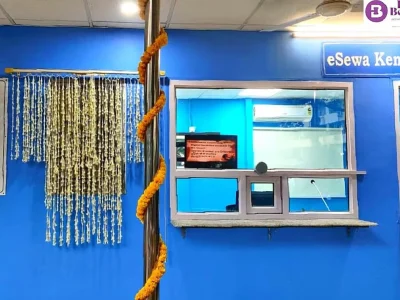
Why is tech adoption failing at the High Courts? The answer lies in process reforms
Technology is adopted in a way that has contributed to the problems of litigation processes at High Courts, instead of simplifying them.

ThePrintAM: What does research institute DAKSH’s report say about the state of India’s commercial tribunal system?
ThePrintAM: What does research institute DAKSH's report say about the state of India's commercial tribunal system?

OPINION | Trillions are stuck in disputes at commercial tribunals but reform agenda ignores it
India’s economic reform journey is a patchwork of contradictions. Highs such as GST 2.0, which promises to simplify compliance, widen the tax base, and smooth the arteries of commerce, are celebrated. Yet hidden lows continue to act as speedbreakers on India’s path to becoming a global ease-of-doing-business powerhouse.

Reform or redundancy? A breakdown of DAKSH report on state of commercial tribunals in India
New Delhi: Ideated as special adjudicatory bodies to review administrative decisions, tribunals across sectors have expanded their powers beyond the ambit of administrative laws. The expectation was that the commercial tribunals would deliver better outcomes than traditional courts. However, in practice, they struggle with the same problems.
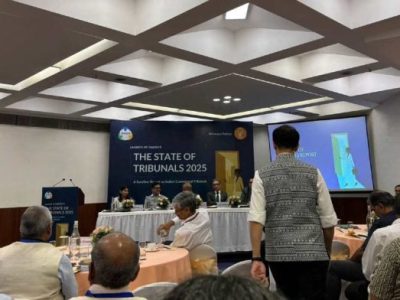
Why India’s commercial tribunals need reforms—few judges with domain expertise, executive control, delays
Tribunals have distinct problems compared to courts, such as the need for more judges with specialised or technical knowledge of the law, the necessity for faster and more economical methods of adjudication, and the lack of finality when it comes to their decisions, former Supreme Court judge Justice Shiva Kirti Singh said Thursday.